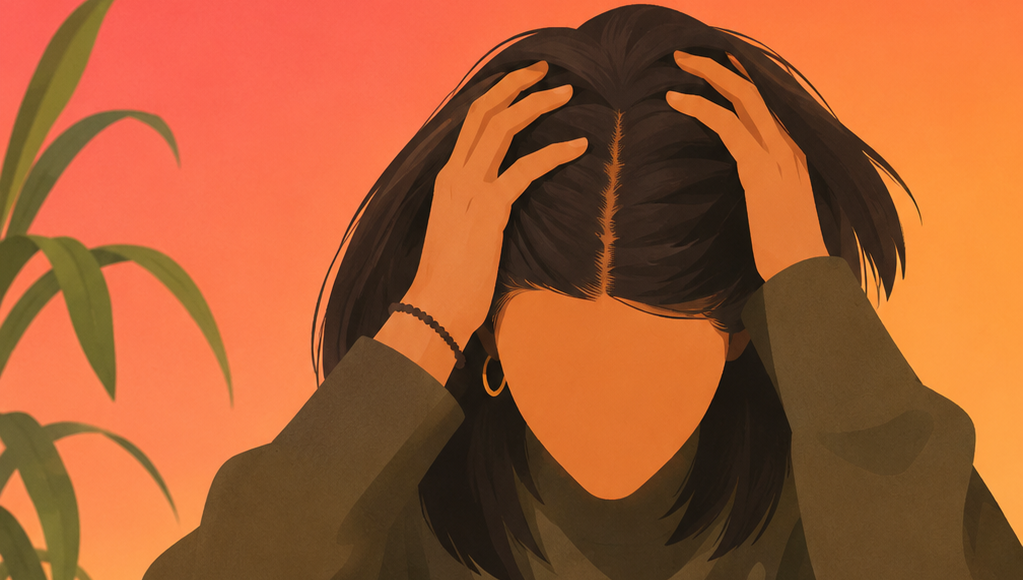
Major physical trauma and hair loss are deeply connected, and almost nobody talks about it. Not in discharge paperwork. Not in follow-up appointments. Not in the conversations you have with people who ask how your recovery is going. By the time the shedding starts, you're often already deep in your healing journey, physically on the mend, maybe even feeling like the worst is behind you. And then your hair starts falling out. Some people have never heard of the connection at all. Others have, but it still doesn't make it any less disorienting when the crisis is technically over and your body is still reacting to it. Either way, most people are left asking the same question: why is this happening now?
This piece covers three types of trauma that show up in your hair: physical trauma to the body from injury, surgery, or illness; physical trauma to the scalp from tension and styling; and the kind of trauma that lives in the nervous system.
When your body has been through something serious: telogen effluvium and post-trauma shedding
When the body experiences a significant physical stressor, whether that's emergency surgery, a serious injury, extended hospitalization, or a prolonged illness, it goes into survival mode. Resources get redirected to healing essential systems. Hair growth, which is not essential for survival, gets deprioritized. The result is telogen effluvium: a condition where a large number of hairs in the growing phase suddenly enter the resting phase, causing widespread shedding months after the original stressor.¹
Here's what makes it so disorienting. The shedding typically begins two to three months after the trauma1, long after the obvious crisis has passed. For many people, the connection to what they went through never gets made, because nobody told them to expect it.
Stress-induced hair loss is not just cosmetic. It is a health signal, and post-surgical or post-trauma shedding is one of the clearest examples of the body communicating what it has been through. Here's what's actually happening in your body when stress causes your hair to fall out.
The good news is that for most people, telogen effluvium is temporary. Once the body stabilizes and nutritional deficiencies are addressed, regrowth is possible. But it takes time, often anywhere from 12-18 months,² and that timeline can feel impossibly long when you're already in recovery from something serious. You're not imagining it. And you're not alone.
When the damage is physical: traction alopecia and what we don't talk about
Not all physical trauma to the hair comes from inside the body. Sometimes it comes from the outside, from the consistent, cumulative tension of how hair is styled and worn over time.
Traction alopecia is hair loss caused by repeated, prolonged pulling force on the hair follicles. The constant tension gradually weakens the follicle's anchoring in the scalp, disrupting its blood supply and growth cycle. It doesn't happen overnight. It starts subtly: a thinning hairline, shorter baby hairs that never grow back, scalp tenderness, or breakage along the temples.
Traction alopecia is one of the most common types of hair loss in women of color, primarily affecting the hairline and nape, and is particularly prevalent among those who wear tight styles such as braids, twists, and weaves. But here's what the clinical conversation often misses: these styles are not just a fashion statement. They're deeply rooted in history and culture, offering a canvas for self-expression and identity. The primary intended benefit is to reduce ongoing wear and tear on the hair.
The cruel irony is that styles worn to protect hair can, when applied with too much tension, cause the very damage they're meant to prevent. And the medical system hasn't always handled this with nuance. Rather than questioning Eurocentric beauty standards that erased native tools, oils, and Afro-textured hair practices over generations, dermatologists have often advised patients to simply stop wearing hairstyles that represent parts of their own identity.³ Black and African people are underrepresented in dermatological research, especially in alopecia studies,³ and that gap has real consequences for the quality of care people receive.
Hair-based discrimination, which shows up in school dress codes, workplace policies, and societal biases favoring Eurocentric beauty standards, contributes to increased stress, anxiety, reduced self-esteem, and identity conflicts.⁴ The physical trauma of traction alopecia and the social trauma of navigating these pressures are not separate things. They happen to the same person, on the same scalp.
The good news is that traction alopecia is often reversible. It is a preventable form of hair loss which can be reversed if diagnosed early. Otherwise, permanent scarring alopecia can result.⁵ Recognizing the warning signs, scalp soreness, tenderness, a receding hairline, those annoying bumps that surface around the follicle and not dismissing pain as normal is the first and most important step. If you're already noticing thinning edges, there are steps you can take to start recovering your hairline.
When the damage goes deeper: mental health trauma and hair loss
Physical trauma to the body is visible. Emotional trauma is quieter, but its impact on hair can be just as significant.
Psychological stress has long been linked to triggering and worsening a range of hair loss conditions including telogen effluvium, androgenetic alopecia, and alopecia areata.⁶ When the body experiences significant emotional stress, whether from grief, trauma, burnout, or a prolonged period of strain, it can trigger the same shedding response as physical trauma. And for many people who have been through something serious physically, the emotional weight that follows is its own separate stressor on the body.
And then comes the second wound.
This relationship appears to be bidirectional. Psychological stress can serve as a trigger or aggravating factor for various types of hair loss, but the experience of losing hair can in turn amplify psychiatric symptoms such as anxiety and depression.⁷ Stress triggers hair loss, but the psychological distress of watching hair fall out sustains and amplifies the very stress response that caused the shedding in the first place.² It becomes a loop that can be very difficult to break.
Cortisol is a key part of that loop. When stress becomes chronic, the body keeps pumping out this stress hormone at levels it was never meant to sustain. Over time that disrupts the immune system, creates inflammation, and interferes with the hair growth cycle in ways that are very real and very measurable.⁸ Most articles don't tell you the full story of what high cortisol actually does to your hair. The body is not being dramatic. It is responding to what it has been through.
So what do you actually do next?
First, know that hair loss following a major physical or emotional trauma is a legitimate medical concern, not a vanity issue. You deserve to have it taken seriously, and it starts with saying so out loud in your appointments.
If you can access a specialist
Ask for a referral to a dermatologist who specializes in hair loss. When you get there, be direct about your history: your surgery, your hospitalization, your stress levels, and your timeline. Providers can't connect dots they don't know exist. Knowing exactly what tests to ask for can make a significant difference in getting answers faster. Tests worth asking about include a full iron panel, ferritin levels, thyroid function, and a hormonal panel if androgens are a concern. These are commonly related to post-trauma hair loss and frequently go unchecked. This is exactly where the MMARA app becomes your best appointment prep tool. Every shedding pattern, stress level, cycle change, and symptom you've logged builds into a dashboard you can show your provider directly, so instead of trying to remember a timeline on the spot, you walk in with the data already done.
If specialist care isn't accessible to you right now
Start with your primary care provider and specifically use the words telogen effluvium and ask whether your hair loss could be connected to your recent physical or emotional trauma. Framing it clinically gives it weight. Ask for blood work covering iron, ferritin, vitamin D, zinc, and thyroid levels. These are standard tests that most GPs can order, and identifying a deficiency is both actionable and often the missing piece.
In the meantime, what you can do at home
Prioritize protein for keratin production, and ensure adequate intake of iron, zinc, and essential vitamins such as A, C, D, and E, as these nutrients support both scalp health and follicular strength. Foods high in protein, iron, and zinc are particularly important, as deficiencies in these are a common driver of hair loss following surgery or illness. Think eggs, fish, legumes, leafy greens, and nuts as accessible starting points. Vitamin deficiencies are one of the most overlooked drivers of hair loss, and understanding which ones matter most is a good place to start.
Steer clear of chemical treatments, heat styling, and harsh shampoos while your hair is in recovery. Gentle, sulfate-free products are better suited to thinning hair. Avoid tight hairstyles that add additional tension to already compromised follicles. These five at-home habits are backed by science and can genuinely move the needle when you're trying to support regrowth.
Managing stress and getting adequate rest supports the body's overall recovery, and hydration plays a bigger role in scalp and follicle health than most people realize. These aren't groundbreaking interventions, but they matter more than most people realize when the body is trying to repair itself.
And give yourself grace with the timeline. Even after the original trigger is removed, cosmetically significant regrowth can take 12-18 months.² That's a long time to be patient with your own body, but regrowth is possible, and understanding what's happening is the first step toward getting there.