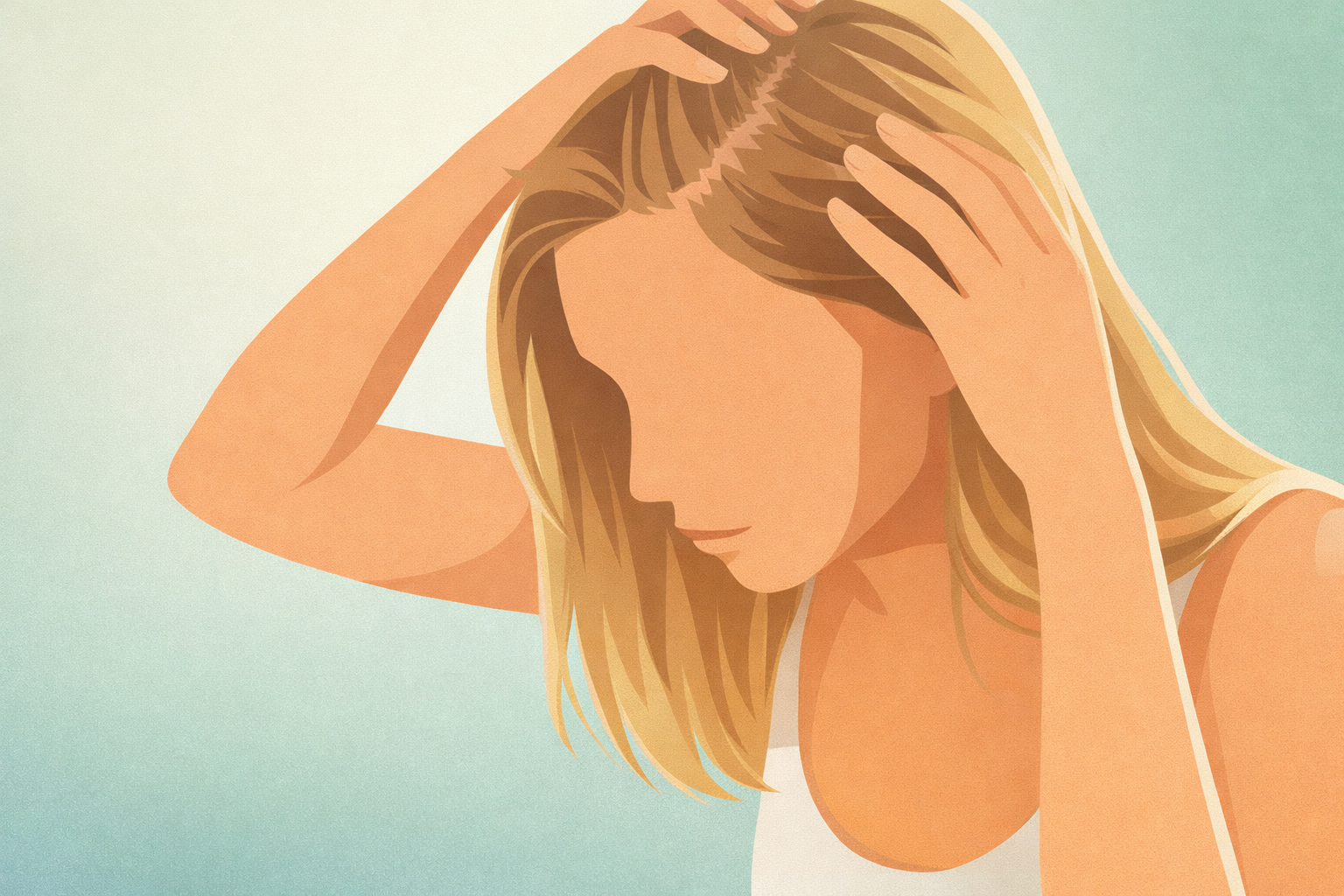
Your Hair Is Talking to You
Most of us think of hair as an accessory, something we cut, color, or style to express personality. But beneath the surface, your hair is doing something extraordinary: it’s keeping a record.
From hormone fluctuations to stress levels and nutrient deficiencies, your hair quietly reflects what’s happening inside your body. It’s not just a strand of keratin, it’s a living indicator of your health. Recent research shows that changes in hair growth, texture, and shedding patterns can reveal imbalances long before other symptoms appear. In fact, your hair may be one of the earliest warning signs that something in your body’s ecosystem is out of sync.
At MMARA, we call this concept hair as a health signal and it’s transforming how women understand their bodies.
The Biology of Hair: A Window Into Your Inner World
To understand why hair mirrors your health, you first have to understand what it is. Each hair grows from a follicle buried deep in your scalp, a living mini-organ that interacts with your blood, hormones, and nervous system.
These follicles are highly sensitive. They rely on a steady supply of nutrients, oxygen, and balanced hormones to function properly. When your body is under stress physically, emotionally, or metabolically, it instinctively prioritizes vital organs like your heart and brain. That means hair growth gets pushed to the back burner. This makes hair a biological barometer of your internal state. Because hair cells are among the fastest-growing in the body, they’re also among the first to respond when something changes in your nutrition, hormones, or immune system.
In other words: before you feel the fatigue, before the lab numbers shift, your hair might already be signaling distress.
What Research Shows: How Hair Reflects Health Conditions
Scientists are increasingly studying hair as a noninvasive biomarker, meaning it can reveal clues about health without drawing blood or running scans. Here’s what the research says about how hair responds to different internal changes:
1. Hormonal Health
Hormones are one of the most powerful regulators of hair growth.
Fluctuations in estrogen, progesterone, and testosterone directly influence the hair growth cycle: the delicate rhythm of growth (anagen), rest (catagen), and shedding (telogen).
- Estrogen and progesterone help keep hair in its growing phase, which is why many women notice thicker hair during pregnancy.
- When estrogen drops after childbirth, during menopause, or with conditions like PCOS, more follicles shift into the shedding phase.
- Thyroid disorders, both hypo- and hyperthyroidism, can lead to diffuse thinning because thyroid hormones control cellular metabolism.
So when your hair starts shedding more than usual, it might not just be stress or “bad products”, it could be your hormones waving a flag for attention.
2. Nutritional Deficiencies
Your hair is made primarily of protein, but it also depends on a range of micronutrients to grow strong and resilient.
Research links hair thinning and breakage to deficiencies in:
- Iron and ferritin, which transport oxygen to hair follicles
- Vitamin D, which influences follicle cycling
- Zinc and B-vitamins, which support protein synthesis and cell turnover
- Omega-3 fatty acids, which reduce scalp inflammation
Hair actually stores a record of your nutrient levels. Scientists can measure minerals like zinc, magnesium, and selenium in hair samples to assess long-term nutritional status, something a single blood test can’t capture.
3. Stress & Cortisol Imbalance
You’ve probably heard someone say, “I’m so stressed, my hair is falling out.”
When your body is under chronic stress, it releases cortisol, a hormone that can disrupt the normal hair cycle and push follicles into a resting phase, a condition known as telogen effluvium.
A groundbreaking 2021 study found that cortisol can even be measured directly in hair strands, making hair a physical record of your stress over time1. This means your hair doesn’t just show what’s happening now, it reflects what’s been happening for months. If you’ve been in a high-stress season, your hair will remember.
4. Metabolic and Inflammatory Conditions
Hair loss and changes in texture are increasingly linked to underlying metabolic dysfunctions like insulin resistance and chronic inflammation. Inflammatory molecules can disrupt follicle signaling and damage the cells responsible for hair growth. Conditions like alopecia areata, lupus, and other autoimmune diseases directly attack the follicles, but even low-grade inflammation from poor diet, lack of sleep, or gut imbalance can cause noticeable hair changes.
Simply put: your scalp is part of your body’s ecosystem. When inflammation rises, it shows.
5. Environmental and Lifestyle Factors
Hair also records what you’ve been exposed to like pollution, UV radiation, even heavy metals and toxins. Researchers use hair analysis to track everything from lead exposure to drug metabolism and environmental pollutants.
Why Hair Is an Indicator, Not Just Another Symptom
By now you’re probably noticing a pattern, our hair keeps a record of many facets of our life and lifestyle. And what’s more, hair is a health signal distinct from other indicators like skin, nails and mood in a few ways:
- It reflects long-term changes. Hair grows about half an inch per month, meaning each strand carries a timeline of your biological history.
- It responds to both internal and external stressors. Hormones, nutrients, emotions, and environment all leave their mark.
- It’s noninvasive and visible. You don’t need lab work to notice your hair changing, you can see and feel it.
Unlike sudden fatigue or skin flare-ups, hair changes tend to occur gradually, giving you time to detect, respond, and rebalance before more serious symptoms emerge.
How to Tune In to Your Hair’s Signals
Your hair is already sending messages, you just need the right tools to interpret them.
Here’s how to start listening:
- Track changes. Note shedding volume, scalp sensitivity, dryness, and oiliness over time.
- Log your stress and sleep. High cortisol or poor rest can alter your hair cycle months later.
- Pay attention to your cycle or hormonal shifts. Hair responds dynamically to estrogen, progesterone, and thyroid levels.
- Support your scalp health. Massage, exfoliate, and nourish the scalp to boost circulation and nutrient delivery.
- Look for patterns vs. moments. A few extra strands in the shower aren’t cause for panic, but persistent changes are worth noting.
Still not sure about what to track, the MMARA app is a hair tracking app that helps you keep your insights and observations in one place. What’s more, it lets you connect hair changes with lifestyle, stress, and health data, revealing trends over time so you can take proactive action instead of reactive worry.
Listen Before It Breaks
Your hair is more than a beauty statement. It’s a health statement.
When your hair starts changing (thinning, shedding, losing its shine) it’s not betraying you. It’s communicating with you. The more you listen, the more you’ll understand your body’s story.
MMARA helps you decode those signals so you can restore balance, strengthen your hair, and reconnect with your body from the inside out.
Ready to learn what your hair is trying to tell you? Download the MMARA app to start tracking your hair and health patterns today, because self-care starts with self-awareness.